From Goodwill to Gold: How American Teens Are Building Empires Out of Other People's Trash
From Goodwill to Gold: How American Teens Are Building Empires Out of Other People's Trash
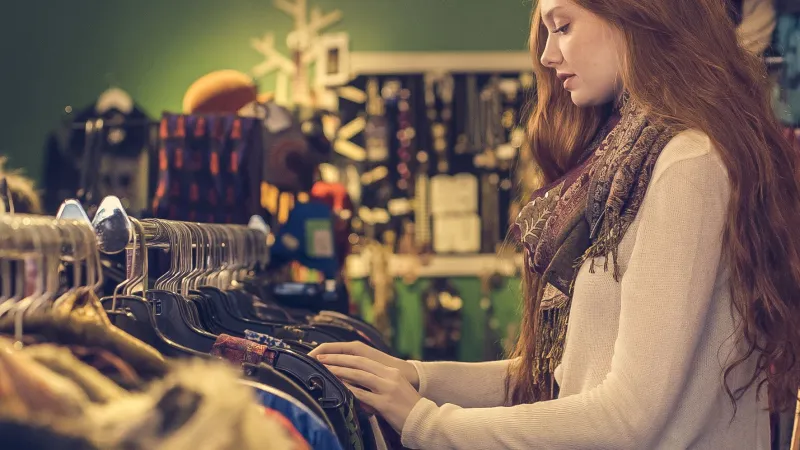
Somewhere in a Goodwill in Columbus, Ohio, a seventeen-year-old named Maya is speed-running the women's section like she's on a game show where the prize is financial freedom. She's got a tape measure in her back pocket, a phone full of Depop listings, and the kind of laser focus that most adults only achieve when they're late for a flight. In forty-five minutes, she'll have spent $31 and walked out with the raw materials for roughly $400 worth of resale inventory. Her mom thinks she's "going through a phase." Her Depop followers — all 12,000 of them — think she's a genius.
Welcome to the thrift flip economy. It's chaotic, it's creative, it smells faintly of mothballs, and it is absolutely, undeniably real.
The Hustle Has a New Uniform (And It Cost $4)
The basic concept isn't new — people have been buying low and selling high since the dawn of commerce. But what's happening right now among American teenagers and early-twentysomethings is something qualitatively different. This isn't just reselling. It's a full-blown creative subculture built on the intersection of fashion, sustainability, entrepreneurship, and the very millennial-coded need to document everything on social media.
The modern thrift flipper typically operates across multiple platforms simultaneously. Depop handles the fashion-forward vintage stuff. Poshmark moves the brand names. eBay is for the weird deep cuts — the niche collectibles, the Y2K artifacts, the inexplicable Pokémon-adjacent items that somehow command $80 from someone in Portland. TikTok and Instagram are the marketing engine, turning every thrift haul into content and every upcycling project into a mini-documentary that doubles as a storefront.
Jordan, 19, runs his operation out of his bedroom in Atlanta. He started flipping sneakers at 15, pivoted to vintage workwear at 17, and now makes more per month than his dad did at his first post-college job. "I don't think of it as a side hustle anymore," he says, photographing a pair of perfectly distressed Carhartt overalls against his carefully curated bedroom wall. "This is just... my job. My actual job."
The Art of the Find
Ask any serious thrift flipper what separates them from a casual secondhand shopper and they'll get very intense very quickly. There's a whole vocabulary here: "dead stock" (unworn vintage with original tags), "grails" (the holy-grail finds that make the whole hunt worth it), "lowballing" (the dark art of negotiating at estate sales), and "the flip" itself — the transformation of raw thrift-store chaos into something someone on the internet desperately wants to own.
In Portland, 21-year-old Simone has built a following around what she calls "ugly upcycling" — taking legitimately hideous pieces and reworking them into something that feels intentional and weird in the best possible way. She'll take a floral grandma cardigan, crop it, add hand-embroidered text, and list it for $75. It sells in hours. "People want things that feel human," she explains. "Fast fashion looks like a robot made it. My stuff looks like a person made it, because a person did."
This is the part that gets genuinely interesting. The thrift flip economy isn't just about arbitrage — it's about taste, curation, and creative labor. The teenagers doing this well aren't just buying cheap and selling expensive. They're functioning as designers, stylists, photographers, copywriters, and social media strategists all at once. It's an absurd amount of skill for a job that technically doesn't exist in any career counselor's handbook.
The Platforms Are the Product
None of this works without the infrastructure, and the platforms know it. Depop — which Etsy acquired for $1.6 billion in 2021 and has been nervously trying to figure out ever since — remains the cultural heartbeat of the movement. Its interface is basically Instagram crossed with a flea market, and its user base skews young, style-obsessed, and deeply suspicious of anything that feels corporate.
Poshmark, meanwhile, has leaned into the social commerce angle, encouraging users to share listings, follow each other, and participate in "Posh Parties" — virtual shopping events organized around themes. It's QVC for people who think QVC is deeply uncool, which, to be fair, is most people under 35.
TikTok is perhaps the most powerful force in the ecosystem, not as a marketplace but as a discovery engine. A well-timed thrift haul video can turn an unknown teenager into a micro-celebrity overnight, flooding their Depop shop with followers and their PayPal with money. The feedback loop is intoxicating and, for some, financially transformative.
Is This Actually Sustainable, Though?
Here's where things get complicated, because Nanigac is nothing if not willing to ask the uncomfortable question at the party.
The thrift flip economy has a supply problem. As more people flood thrift stores looking for inventory, prices at those stores have quietly crept up. Goodwill, Savers, and their ilk have gotten savvier about pricing vintage and brand-name items, which squeezes margins for resellers. There's also a genuine ethical debate simmering underneath the aesthetic cool: are young entrepreneurs cherry-picking the best items from stores that exist to provide affordable clothing to lower-income communities?
It's a real tension, and the community handles it with varying degrees of thoughtfulness. Some resellers are careful to shop at estate sales and swap meets rather than charity shops. Others argue that the attention they bring to secondhand fashion drives more donations overall. Neither argument is entirely wrong, which is the kind of moral ambiguity that makes for excellent content and genuinely difficult policy conversations.
Then there's the question of longevity. Markets mature. Algorithms change. What happens to the thrift flip economy when everyone's doing it, when the platforms take bigger cuts, when the trend cycle inevitably moves on to whatever comes next?
Maya, back in Columbus, has thought about this. "People have been saying thrifting is over for like three years," she says, adding a just-found corduroy blazer to her basket. "And every year it gets bigger." She's not wrong. The resale market in the US is projected to hit $70 billion by 2027, according to ThredUp's annual report. That's not a phase. That's an industry.
The Real Disruption
Maybe the most radical thing about the thrift flip economy isn't the money or the fashion or even the sustainability angle. It's what it says about how a generation thinks about work. These teenagers aren't waiting for someone to give them a job title. They're not building toward a resume. They're constructing entire economic identities out of creativity, hustle, and an almost preternatural comfort with uncertainty.
Is it a guaranteed path to success? Absolutely not. Most thrift flippers make modest supplemental income, not life-changing wealth. The six-figure stories are real but rare, and they tend to belong to people who got in early, built audiences aggressively, and treated it like a business from day one.
But here's the thing: so does every other entrepreneurial path. The difference is that this one starts at a Goodwill on a Tuesday morning, costs $31 to enter, and looks really good on TikTok.
And honestly? That tracks perfectly for 2025.