Small City, Big Weird Energy: The Under-the-Radar American Towns Quietly Inventing the Future of Cool
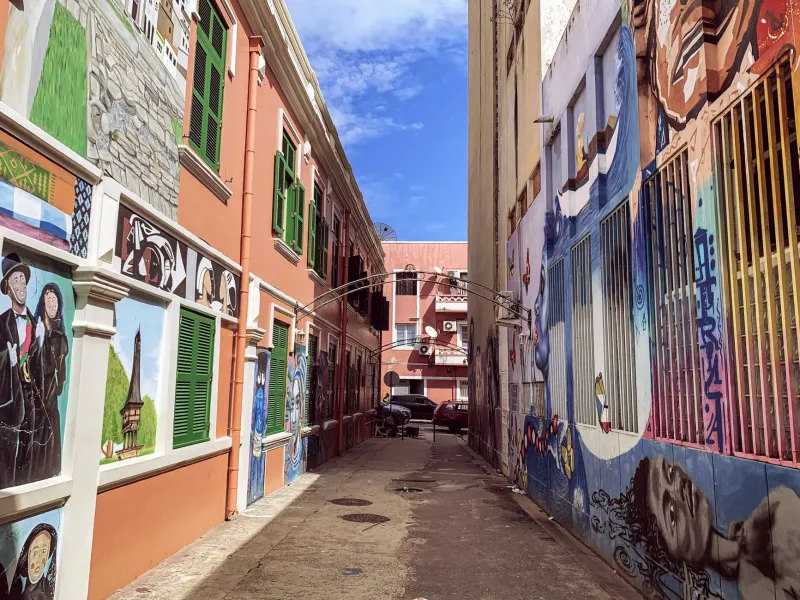
Let's have an honest conversation about the American cultural imagination. We've been trained — by media, by tourism boards, by approximately ten thousand think pieces — to believe that culture happens in two places: New York and Los Angeles. Everything else is flyover country, a stopover, a place you're from rather than a place you go.
This is, to put it politely, complete nonsense.
The most interesting art, music, food, and subculture in America right now is incubating in places with populations under 100,000, in towns that don't have a flagship Equinox or a celebrity-chef outpost with a three-month waitlist. These are places where rent is still cheap enough that artists can actually afford to make things, where community is tight enough that scenes develop real identity, and where the absence of a dominant cultural industry means people build something genuinely their own.
Here are some of the places doing it loudest.
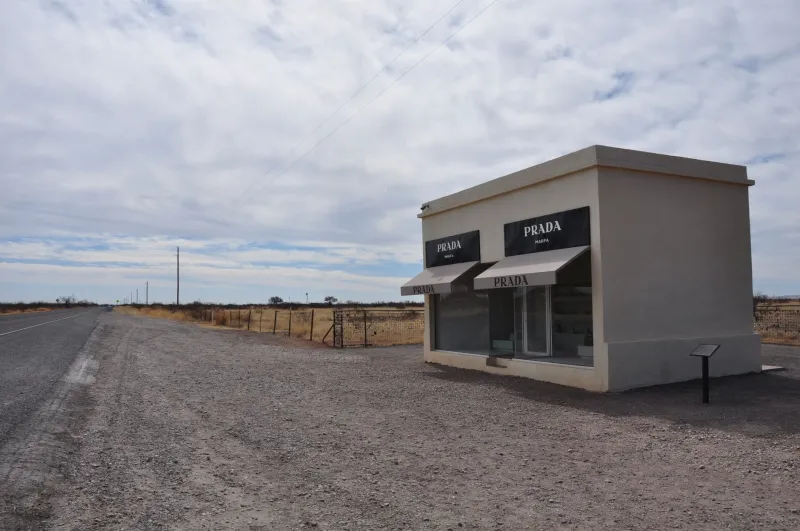
Marfa, TX — The Desert That Ate the Art World
Okay, Marfa has been on the radar long enough that it barely counts as a secret anymore. But it earns its spot on this list because it pioneered the entire template: a town of around 2,000 people in the Chihuahuan Desert that somehow became one of the most significant contemporary art destinations in the world, anchored by the Chinati Foundation's monumental Donald Judd installations and sustained by a community of artists, writers, and weirdos who chose the middle of nowhere on purpose.
What makes Marfa still worth talking about isn't the gallery openings or the design-conscious hotels. It's what it proved: that a place doesn't need size or infrastructure to develop cultural gravity. It needs vision, stubbornness, and enough cheap land for people to do strange things on. The Marfa model has been studied, referenced, and attempted to replicate in dozens of small towns since — which is both a tribute and a cautionary tale.
Paducah, KY — The Quilt Town That Became an Artist Town
Paducah sits at the confluence of the Ohio and Tennessee Rivers in western Kentucky, and it has around 27,000 residents. It also has one of the most quietly remarkable artist relocation programs in the country — the Artist Relocation Program, launched in the early 2000s, which offered incentives for artists to move into and renovate the historic Lower Town neighborhood. The result is a genuinely functional arts district in a small river city that had been economically struggling.
The National Quilt Museum is here, which sounds niche until you realize it draws visitors from every state and dozens of countries, and that the quilting tradition it celebrates represents one of the most significant folk art lineages in American history. Paducah doesn't have a vibe manufactured by a marketing agency. It has an identity that grew organically from the community's actual history and the artists who chose to invest in it. That's rarer than it sounds.
Bisbee, AZ — The Mining Town That Became a Portal
Bisbee is perched in the Mule Mountains of southeastern Arizona, population around 5,000, and it operates on a frequency that's hard to describe without sounding like you've been in the desert sun too long. It's a former copper mining boomtown that went bust, then got colonized by artists and counterculture types in the 1970s, and has been in a state of beautiful creative fermentation ever since.
The town's Victorian-era architecture cascades down steep canyon walls in a way that makes it look like it was designed by someone who had heard of a city but never actually seen one. There are galleries, live music venues, working artists everywhere, and an annual Bisbee 1000 Stair Climb that is exactly what it sounds like. The scene here isn't trying to become the next anything. It's completely comfortable being the only Bisbee, which is exactly what makes it magnetic.
Eau Claire, WI — The Midwest's Secret Music Capital
Eau Claire has Justin Vernon — aka Bon Iver — to thank for some of its national profile, but the music scene here runs considerably deeper than one very famous folk-electronic artist. The Eaux Claires festival, which Vernon co-founded with The National's Aaron Dessner, put the city's creative community on the map in a way that stuck, attracting collaborators and artists who discovered that the community had real substance behind the festival buzz.
The Brewing Projekt and other local gathering spaces have become genuine cultural infrastructure. There's a real arts community here that predates and extends beyond the Bon Iver orbit — visual artists, experimental musicians, filmmakers — all operating in a mid-sized Midwestern city where the cost of living allows for the kind of slow, unglamorous artistic development that cities like Nashville or Austin priced out years ago. Keep an eye on Eau Claire. It's not done yet.
Richmond, VA — The Murals, the Mayhem, and the Music
Richmond sits in an interesting historical and cultural position: a Southern city grappling seriously with its Confederate monument legacy while simultaneously hosting one of the most vibrant young creative communities on the East Coast. The tension is generative rather than paralyzing, and the result is a city that feels genuinely alive in a way that its size — around 230,000, so pushing the upper limit here — doesn't fully explain.
The mural scene alone would justify the visit. Broad Street has become an outdoor gallery of serious scale and ambition. The DIY music scene is ferocious and genre-fluid. The food scene has gone from underrated to legitimately great, with independent restaurants that would hold their own in any major city. And the skate and street culture communities have produced talent that's punched up to national and international levels. Richmond is doing the work.
Taos, NM — The Original Artist Colony, Still Going
Long before Marfa, there was Taos. The Taos Society of Artists was founded in 1915, drawing painters who came to capture the light and landscape of northern New Mexico and ended up building a community that never really stopped. Today Taos is a town of around 6,000 people with more galleries per capita than almost anywhere in the country, a living Pueblo that is one of the oldest continuously inhabited communities in North America, and a music and food scene that punches absurdly above its weight.
The ski valley brings seasonal visitors, but the permanent creative community is the real story. Taos has maintained its identity through waves of outside interest and gentrification pressure in a way that few small arts towns manage, partly because the landscape itself is so specific and demanding that it filters for a particular kind of person — someone who chose this place, not just a cheap version of somewhere else.
Why This Matters
The cultural geography of the United States is not a pyramid with New York and LA at the top and everywhere else below. It's more like a mycelium network — interconnected, distributed, with nodes of intense creative activity appearing in unexpected places and feeding the larger ecosystem in ways that are easy to miss if you're only looking at the biggest nodes.
The small cities on this list aren't waiting for permission from the coasts. They're building scenes on their own terms, with their own aesthetics, shaped by their own specific histories and geographies and communities. That specificity is exactly what makes them interesting — and exactly what tends to get flattened out when a place gets too famous too fast.
So: book the trip. Drive the weird route. Stop in the town you've never heard of. The most interesting thing happening in American culture right now might be in a place your phone's navigation system considers a detour.