Stitch, Fold, Revolt: The Young Americans Hand-Binding Books Like the Algorithm Can't Touch Them
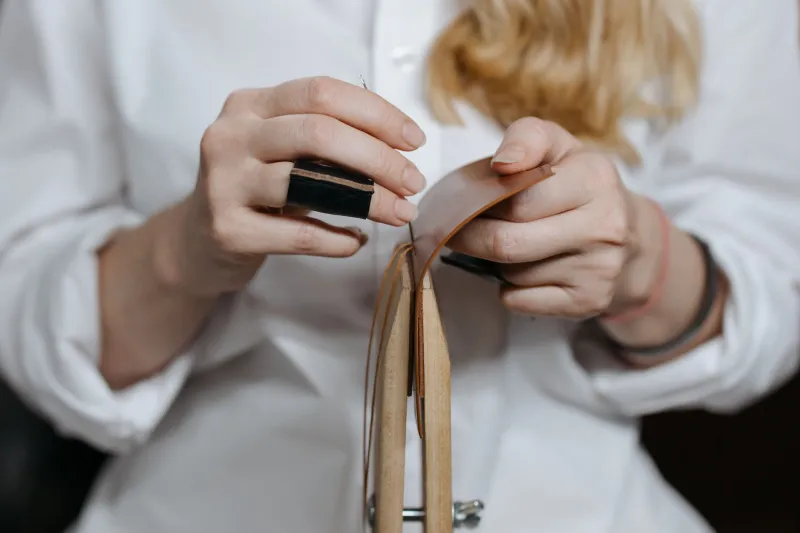
Somewhere in a rented studio space in East Nashville, a 26-year-old named Priya is threading a curved needle through a stack of handmade paper with the focused energy of someone defusing a bomb. The result won't be available on Amazon. It won't have a barcode. It will exist in exactly one copy, and whoever holds it will know — physically, in their hands — that a human being made this thing on purpose.
Welcome to the indie bookbinding underground, where the revolution is sewn together with linen thread and a bone folder.
Paper Cuts and Power Moves
Hand bookbinding is not new. It is, in fact, spectacularly old — monks were doing it in the fourth century, and European guilds were protecting the craft with ferocious seriousness for centuries after that. What is new is who's doing it and why. The current wave of American bookbinders skews young, creative, and conspicuously unimpressed with the publishing industry's algorithmic content machine. These aren't hobbyists making journals for grandma. These are people who have watched platform after platform flatten creative output into engagement metrics and decided, loudly, that they'd rather spend four hours sewing a Coptic-stitch sketchbook than upload another piece of content optimized for the feed.
The DIY bookbinding workshop circuit has quietly exploded across American cities. In Brooklyn, community art spaces are running sold-out weekend intensives. In Portland and Chicago, independent studios offer drop-in binding nights that feel less like craft classes and more like very intentional social rituals — people showing up with their own papers, their own fabrics, their own weird ideas about what a book can be. The waiting lists for some of these workshops stretch months.
"People are hungry for something that doesn't have a loading screen," says Marcus, who runs a bookbinding collective out of a converted garage in Albuquerque. "When you hold a book you made with your hands, it doesn't care how many followers you have. It just is."
The Instagram Paradox (Yes, There's One)
Here's the delicious irony at the center of this whole movement: the hand-bookbinding community has built a genuinely thriving presence on the very platforms it's philosophically pushing back against. Search #bookbinding on Instagram and you'll find hundreds of thousands of posts — close-up videos of needles piercing paper, time-lapses of covers being tooled with hot stamps, aesthetic flat lays of finished volumes arranged on linen-draped tables. The content is gorgeous. It's also deeply, almost aggressively tactile in a way that makes your thumbs feel weirdly inadequate.
The difference, practitioners will tell you, is intentionality. The Instagram presence isn't about building a brand or chasing virality — it's about community documentation. It's people showing each other what's possible. The books themselves remain stubbornly, gloriously physical. You can't download a hand-sewn vellum cover. You cannot stream a Longstitch binding. The digital presence is just a map to the real territory.
And that real territory includes the underground book fairs, which have become some of the most energetically weird creative events happening in American cities right now. Not to be confused with traditional book fairs (which have their own considerable charm), these gatherings are chaotic, intimate, and stocked with objects that strain the definition of "book" in the most satisfying ways. Accordion-fold structures that unfold into six-foot panoramas. Books with no text, just texture. Covers made from reclaimed leather, old denim, pressed botanicals, and — in one memorable case witnessed at a Philadelphia fair — a deconstructed Monopoly board.
The Tools of Anarchy Are Surprisingly Affordable
One of the great democratizing facts about bookbinding is that the barrier to entry is genuinely low. A basic starter kit — bone folder, awl, bookbinding needle, linen thread, PVA glue — runs maybe forty bucks. YouTube is absolutely littered with tutorials covering everything from simple pamphlet stitches to elaborate Japanese stab binding techniques. The knowledge is free. The materials are cheap. What it costs is time and attention, which might be precisely why it feels so radical in 2024.
"It's slow," admits Deja, a 23-year-old in Detroit who started binding books during the pandemic and now sells one-of-a-kind volumes at local markets. "It takes forever and you can't rush it. That's kind of the whole point. Everything else in my life is optimized. This is the one thing I do that refuses to be."
That slowness is doing something important culturally. The hand-bound book is, among other things, a physical argument against the disposability of digital content. It is an object with weight, with smell, with the visible evidence of human labor in every stitch. It ages. It wears. It becomes more itself over time rather than becoming obsolete.
What the Publishers Don't Want You to Know
The traditional publishing industry, for all its current struggles, still operates on a model that treats books as units of content delivery — optimized for discoverability, priced for market segments, designed by committee. The indie binding community has essentially looked at that model and responded with a very polite, very crafty middle finger.
This isn't anti-literature. If anything, it's hyper-literary — a return to the idea that the physical form of a book is itself expressive, that the container and the content are in conversation. The most interesting binders working today are making objects where you can't separate the design from the meaning. The structure is the statement.
And the market, such as it is, seems to agree. Hand-bound artists' books regularly sell for hundreds of dollars at fairs and through direct online sales. Limited edition runs — sometimes as small as five or ten copies — sell out fast. Collectors are circling. Galleries are taking notice.
But ask most binders if they're trying to scale up, and they'll laugh. That's not the energy. The energy is Priya in Nashville, threading her needle, making one perfect thing that will outlast every app currently installed on her phone.
Honestly? That sounds like winning to us.