Ink-Stained and Ungovernable: How America's Zine Makers Are Torching the Publishing Industry One Staple at a Time
Ink-Stained and Ungovernable: How America's Zine Makers Are Torching the Publishing Industry One Staple at a Time
Here is a sentence no venture-backed media executive wants to read: a 24-year-old in Portland with a $40 Kinkos budget is currently out-publishing them. Not in reach. Not in revenue. In relevance. In the thing that actually makes people feel something when they hold a piece of media in their hands and think, holy cow, someone made this for me.
The American zine underground is not a nostalgia project. It is not a twee hobby for people who own too many tote bags. It is a full-scale, quietly ferocious publishing revolution happening on kitchen tables and in cramped copy shops across every zip code in this country — and if you haven't been paying attention, you are genuinely missing one of the most interesting cultural stories of the decade.
What Even Is a Zine in 2025, and Why Should You Care
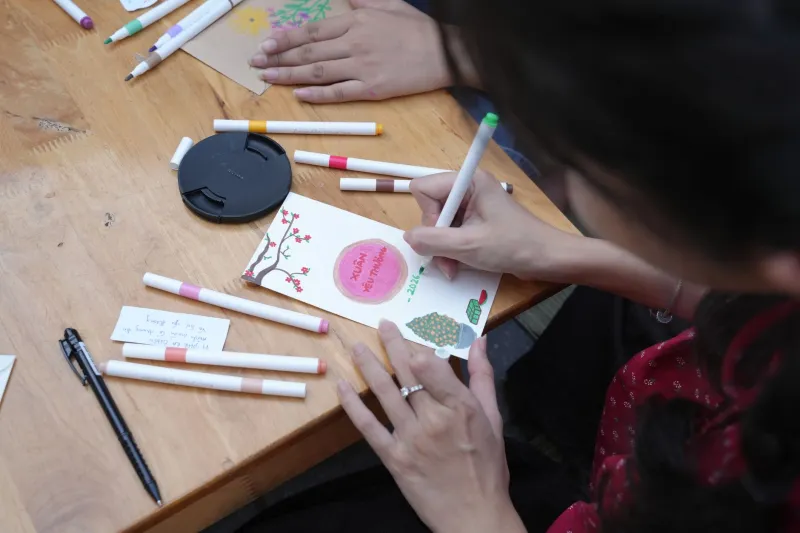
A zine — short for magazine or fanzine, depending on who you ask and how pedantic they're feeling — is essentially a self-published micro-publication. No editorial board. No advertisers. No brand safety guidelines. You write it, design it, copy it, fold it, staple it, and sell it for somewhere between two and five dollars out of a tote bag at a record fair or a punk show or, increasingly, through a Bandcamp-style direct-to-reader online storefront.
The format has been around since the 1930s, got turbocharged by science fiction fan communities in the '50s, went absolutely feral during the punk and riot grrrl movements of the '70s and '90s, and was then widely declared dead approximately seventeen times between 2005 and 2019. It was not dead. It was, in fact, sharpening its scissors.
What's different now is the density of the scene and the specificity of the content. These are not general interest publications trying to appeal to everyone. These are hyper-targeted, almost aggressively personal documents that exist because someone had a thing to say and could not find a single existing publication willing to say it the right way.
The Dispatches Coming Out of America's Corners
Take Detroit, where a collective called Motor City Manifesto has been printing a sports conspiracy zine for three years running. We are talking deep, unhinged, genuinely researched takes on the Lions, the Tigers, and the broader psychic wound of being a Detroit sports fan — illustrated with hand-drawn diagrams and printed on paper the color of old mustard. It sells out at every Lions tailgate. The waitlist for their annual "Cursed Season Retrospective" issue has over 200 names on it.
Or consider what's happening in Portland's queer sci-fi micro-journal scene, where publications like Soft Transmission and Void Correspondence are producing fiction, art, and theory that sits somewhere between Ursula K. Le Guin and a group chat you really wish you were in. These zines are not trying to get reviewed in the New York Times. They are trying to reach the exact specific person who needs them, and they are succeeding with a precision that no algorithm has ever actually managed.
In Chicago, a teenager named Brianna has been producing a zine about fast food architecture — yes, the buildings — for two years. It is extraordinarily good. She has been offered a column twice. She said no both times.
The Staple Gun as a Political Instrument
Here is the thing about zines that makes media executives nervous and makes everyone else feel a little electric: they are completely ungovernable. There is no platform to be deplatformed from. There is no advertiser to pull out because the content got too spicy. There is no engagement metric to chase, no comment section to manage, no trending audio to slap over your content so the algorithm rewards you with a few more crumbs of reach.
When you hold a zine, you are holding an object that exists entirely outside the attention economy. It asked nothing of the machine to get to you. It was made by a human, moved by human hands, and landed in your hands through some combination of community, curiosity, and the basic human desire to share something you made.
That is not a small thing in 2025. That is, arguably, the most radical act in media.
The progressive politics embedded in the zine world are not incidental. The format has always been a tool of people who were excluded from or actively harmed by mainstream publishing — queer communities, people of color, punks, feminists, disabled artists, anyone whose reality the gatekeepers found too niche or too uncomfortable or too real. The current resurgence is happening in the same communities, with the same urgency, because the problems haven't gone anywhere. The glossy magazines got thinner and the algorithms got louder and the zines got more necessary.
The Economics of Three Dollars and a Lot of Nerve
Let's talk money, because people always assume zine makers are doing this out of pure idealism with no interest in sustainability. That's not quite right.
A well-run zine operation — say, 200 copies per issue, sold at $4 each through a mix of in-person events and a simple online store — can generate $800 per issue. Subtract printing costs (roughly $0.50 to $1.50 per copy depending on length and paper), and you're looking at a few hundred dollars of actual revenue. Not a living wage. But for a quarterly publication with low overhead and zero distribution costs? It's a real number. Add in subscriptions, limited-edition prints, and the occasional collaboration with a small brand that actually fits the vibe, and some zine makers are building something genuinely sustainable.
More importantly, they own it. All of it. Every word, every weird illustration, every opinion that would have gotten softened or killed by an editor at a real publication. That ownership is worth something that doesn't show up in a spreadsheet.
Where to Find the Good Stuff
If you want in — and you should want in — here's where to start. Zine fests are your entry point. Almost every major American city has one now: Portland Zine Symposium, the Chicago Zine Fest, the Brooklyn Zine Fest, the Denver Zine Fest, the list goes on and it keeps growing. Show up with cash, bring a tote bag, and be prepared to spend two hours talking to people who are making the most interesting things you've seen all year.
Distro sites like Pioneers Press and Microcosm Publishing carry hundreds of titles online if you can't make it to a fest in person. And Instagram, for all its algorithmic sins, is still where a lot of zine makers announce new issues — search the hashtag and prepare to fall down a very good rabbit hole.
The Part Where We Say Something Sincere
The zine is not going to replace the internet. It is not going to unseat Spotify or kill the newsletter or make the algorithm disappear. It is doing something better than all of that: it is existing completely outside those systems, quietly and stubbornly, in the hands of people who decided that making something real and handing it to another human being was worth more than any amount of impressions.
In a media landscape where everything is optimized, monetized, and surveilled, the zine is the thing that remembers what it felt like before all of that. And right now, that memory is being stapled together in kitchens across America, one gloriously imperfect copy at a time.
Your move, publishing industry.