Concrete Dreams: Why the Grimy American Basement Is the Most Powerful Creative Studio Nobody's Talking About
Concrete Dreams: Why the Grimy American Basement Is the Most Powerful Creative Studio Nobody's Talking About
There's a particular kind of fluorescent light — flickering, slightly greenish, utterly indifferent to your feelings — that has illuminated more genuine artistic breakthroughs than any gallery in Chelsea or any studio in Silver Lake. It hangs from the exposed ceiling joists of the American basement, and it has been watching over creative chaos since approximately forever.
While the culture industry keeps selling us the myth of the perfectly curated creative space — the loft, the warehouse, the sun-drenched studio with the exposed brick — a quieter, sweatier revolution has been happening underground. Literally. Beneath the living rooms and kitchen tables of ordinary American homes, an entire generation of musicians, zine makers, fashion designers, and general-purpose weirdos has been building something real. Something unglamorous. Something that actually matters.
The Basement Has Always Been Where America Gets Weird
Let's not pretend this is new. The basement has been a creative pressure cooker for decades. Punk bands screamed into borrowed microphones down there in the '70s and '80s. Teenagers built the early internet from basement bedrooms in the '90s. Small hardcore scenes across the Midwest kept entire subcultures alive in unfinished rooms that smelled aggressively of both ambition and wet dog.
But what's happening now feels different in scale and in intention. The creative basement has gone from accidental refuge to deliberate choice. Young artists aren't retreating underground because they have no other options — well, okay, sometimes they are, rent is absolutely unhinged right now — but increasingly, they're choosing the basement because of what it represents. No pretense. No overhead. No audience that expects anything from you yet. Just concrete, bad lighting, and the terrifying freedom to make something completely wrong before you figure out how to make it right.
The DIY Recording Studio: Egg Cartons and Absolute Conviction
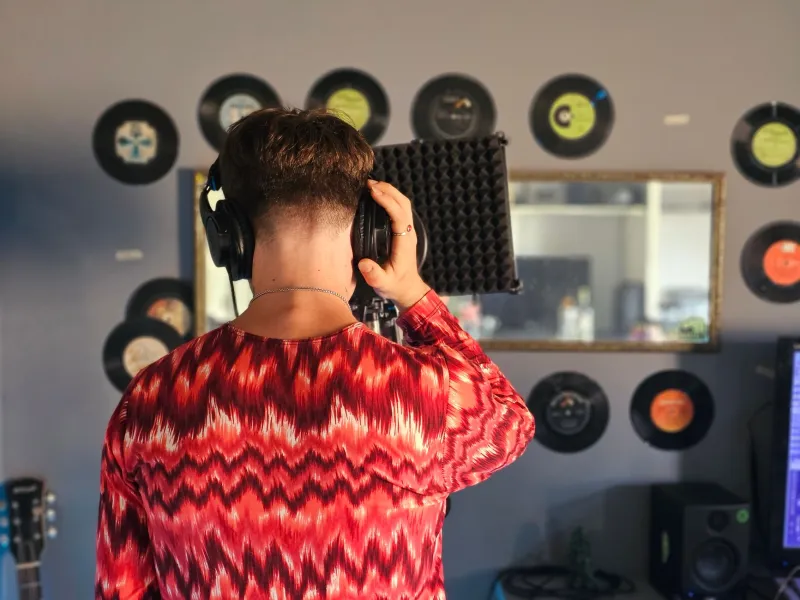
Ask any independent musician under 35 where their first real recordings happened, and statistically speaking, at least half of them will describe a basement. Not a studio. A basement. With egg cartons staple-gunned to the walls for acoustic treatment. With a laptop running a cracked version of software they definitely paid for. With a microphone stand that was actually a music stand with a microphone duct-taped to it.
And yet — and this is the part that should break your brain a little — some of the most interesting music coming out of American cities right now started exactly there. Artists who are now playing mid-sized venues and racking up streaming numbers that would have seemed insane five years ago cut their teeth in spaces that a professional audio engineer would describe as "a nightmare" and an interior designer would describe as "an active crime."
The limitation, it turns out, is the point. When you can't afford to rent real studio time, you learn your tools obsessively. When you can't afford to mess up expensive sessions, you come in prepared. The basement doesn't forgive waste, and that discipline — born of broke necessity — tends to produce artists who actually know what they're doing by the time anyone pays attention.
Zines, Risographs, and the Print Underground
If the basement recording studio is the heartbeat of underground music, the basement print operation is the central nervous system of underground culture more broadly. Across the country, small zine empires are being built on folding tables next to water heaters, fueled by a combination of political urgency, aesthetic obsession, and a frankly alarming amount of black coffee.
The resurgence of zine culture — physical, tactile, deliberately lo-fi — is one of the more quietly radical things happening in American creative life right now. In an era where every piece of content is immediately flattened into an algorithm-optimized rectangle, the zine is aggressively, almost defiantly, itself. It staples wrong. It smudges. The margins are uneven. It costs $4 and it will outlast any Instagram post by approximately a century.
Basements are perfect for this. The mess is already there. The weird solitude is already there. The sense of operating just slightly outside the normal world — which is genuinely what it feels like to be three steps down from your kitchen, printing something at midnight that approximately 200 people will ever hold in their hands — is already baked in.
One-Person Fashion Labels and the Chaos of Small-Batch Everything
Somewhere in Ohio, a 24-year-old is running a fashion label out of a basement sewing room that her parents originally designated as a "craft space" in 2011. The label has a waitlist. The pieces sell out in under an hour. Her Instagram bio lists a city that is not New York, not LA, not any of the places the fashion industry has traditionally decided creativity is allowed to come from.
This is not unusual anymore. The economics of small-batch, direct-to-consumer fashion have made the basement viable as a production space in a way it simply wasn't before. You don't need a factory run. You don't need a wholesale deal. You need a sewing machine, a good dye setup, a phone camera with decent lighting, and the willingness to pack and ship orders while watching reality television at 11pm.
What these basement labels are producing — often weird, often referential, often deeply specific in their aesthetics — is some of the most interesting clothing being made in America. Not because it's technically superior to what big brands produce, but because it carries something that mass production fundamentally cannot manufacture: the fingerprints of the person who made it.
Why Unglamorous Origins Matter
Here's the argument that the basement makes, just by existing: authenticity is not a brand strategy. It's a condition.
The co-working space with the exposed brick and the kombucha on tap is selling you a feeling. The basement gives you the actual thing — discomfort, focus, the specific silence of a space that doesn't care about your vision at all and will not applaud you for having it. You have to make something real there, because nothing else survives the indifference.
There's also something worth saying about access. Renting studio space in a major American city is prohibitively expensive for most young creatives. The basement — your parents', your friend's, the one attached to the apartment you share with four other people — is often the only genuinely free space available. And free space, historically, is where culture gets made. The constraints force invention. The lack of prestige removes the performance of creativity and leaves only the actual work.
The Basement Doesn't Care If You're Cool Yet
That might be the whole thing, actually. The basement is the one creative space in America that will never make you feel like you've arrived, because it is constitutionally incapable of that particular lie. It will not make you feel validated. It will not make your work look better than it is. It will hum at you through the water pipes and flicker at you through the bad lighting and just sort of wait for you to figure out what you're actually trying to make.
And then, if you're lucky and stubborn and willing to spend enough time in that particular uncomfortable dark, you'll make something that didn't exist before. Something that started on a concrete floor under a buzzing fluorescent tube, surrounded by the evidence of everything you tried before it worked.
The basement doesn't need a rebrand. It's been doing the work the whole time.