Quarters, Chaos & Cathode Rays: The Underground Arcade Obsessives Saving Gaming's Soul One Cabinet at a Time
Quarters, Chaos & Cathode Rays: The Underground Arcade Obsessives Saving Gaming's Soul One Cabinet at a Time
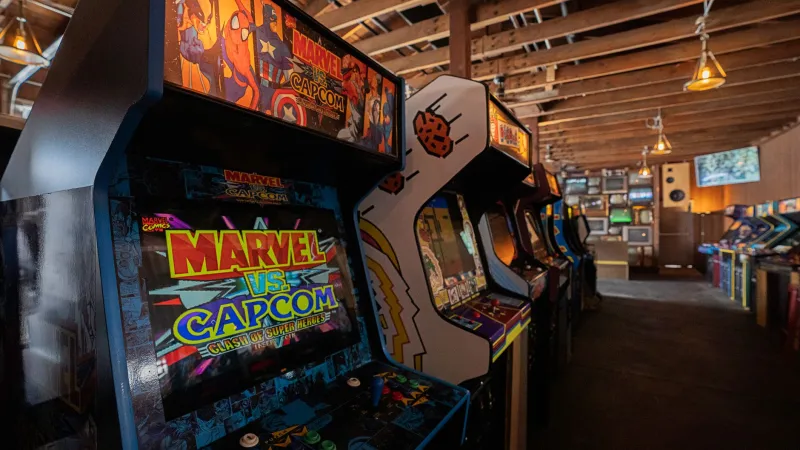
There's a warehouse somewhere in Brooklyn that doesn't exist on any app. No Yelp listing. No Instagram geotag. You find out about it the way you used to find out about everything worth finding — through a friend of a friend who whispered the address like it was a speakeasy password. Inside, bathed in the flickering glow of maybe forty vintage arcade cabinets, people are feeding quarters into machines older than most of their parents' marriages. The air smells like old carpet and electricity. It is, inexplicably, perfect.
This is the underground arcade scene. And it is absolutely, joyfully, thriving.
Not Your Bougie Barcade
Let's be clear about something: this is not Dave & Buster's. This is not a gastropub that bolted a Ms. Pac-Man cabinet next to the charcuterie board to give the space "character." The people operating in this subculture — collectors, restorers, obsessive modders, self-styled preservation freaks — have about as much in common with the polished barcade chain industry as a punk zine has with a magazine sold at airport newsstands.
The underground arcade world runs on passion so intense it borders on clinical. These are people who spend weekends hunting storage auctions for water-damaged Galaga boards, who argue on forums for three hours about the correct shade of orange for a Donkey Kong side panel, who have opinions — strong, loud, non-negotiable opinions — about the specific sound profile of a genuine Atari coin door spring. They are, in the most affectionate possible sense of the phrase, completely unhinged. And the spaces they're creating because of that unhinged devotion are unlike anything else happening in American culture right now.
The Archaeology of Play
Take Dale and Renee Kowalski, who operate a quarter-op arcade out of a converted grain storage building on the outskirts of Findlay, Ohio. The setup is aggressively unpretentious — hand-painted signs, mismatched chairs, a snack machine that accepts exact change only — but the collection is extraordinary. Forty-seven fully operational cabinets, every one of them restored by Dale in a workshop behind the building that looks like a surgeon's operating room got romantically involved with a RadioShack.
"People drive three, four hours," Renee says, not bragging, just stating the fact with mild bewilderment. "We get families, we get guys in their fifties who cry a little when they see Centipede, we get twenty-year-olds who've never touched a physical arcade machine in their lives. They all end up talking to each other."
That last part — the talking to each other — turns out to be the thing everyone in this scene keeps circling back to. There's something about standing shoulder-to-shoulder at a shared screen, watching someone's last life disappear on Frogger, that collapses social distance in a way that handing someone your phone to show them a TikTok simply does not.
The Modder Underground
If the collectors are the archaeologists, the modders are the mad scientists. Scattered across the country in home workshops and rented maker spaces, a loose community of hardware hackers is doing things to vintage arcade boards that would make a purist faint and a futurist weep with joy simultaneously.
Multi-game conversions — where a single cabinet gets loaded with hundreds of titles via modified hardware — are the gateway drug. But the truly adventurous are going further: installing modern displays that perfectly mimic CRT scanlines, building entirely new cabinets in the style of specific eras, even creating original games designed to run on authentic vintage hardware. The aesthetic is deeply, deliberately analog. The technical skill required is anything but.
Online communities like KLOV (Killer List of Videogames) and various Discord servers function as the connective tissue, trading repair guides, sourcing obscure components, and occasionally descending into the kind of heated debate that can only happen when people care about something this much. Someone once posted a seventeen-paragraph argument about the ethics of re-manufacturing original arcade bezels. It got 340 replies. This is their Super Bowl.
Pop-Up, Plug In, Disappear
Back in that Brooklyn warehouse — which runs as a rotating underground game night roughly once a month — the organizer, who goes by Vega (yes, like the Street Fighter character, no she will not elaborate further), explains the philosophy with the calm certainty of someone who has thought about this a great deal.
"The point is that it's not permanent," she says, gesturing at a row of cabinets that includes a mint-condition Tempest and a beautifully battered Tron. "Permanent things become institutions. Institutions become corporate. We move, we change the lineup, we keep it weird. The moment this feels like a brand, we've failed."
This anti-institutionalization instinct runs deep through the scene. There's a deliberate resistance to the kind of scale and polish that would make these spaces legible to a venture capital firm or a lifestyle media brand. The roughness isn't aesthetic laziness — it's a philosophical position. Authenticity, these people will tell you, requires friction.
Why This, Why Now
It would be easy to frame the underground arcade revival as pure nostalgia — boomers and Gen Xers chasing the ghost of the mall arcade, millennials performing retro-coolness for Instagram. And sure, some of that is happening. But the most interesting thing about this scene is how many genuinely young people are in it, kids who have no personal memory of the original arcade era and zero interest in nostalgia as a concept.
For them, the appeal seems to be something more urgent. In an era of infinite digital content optimized to capture and monetize attention, there's something almost radical about a machine that demands your full physical presence, gives you three lives, and then it's done. No algorithm. No recommended content. No one harvesting your behavioral data. Just you, a joystick, and the specific, unrepeatable texture of this moment.
The screens are old. The sounds are old. The quarters are increasingly hard to source. None of that matters. What these spaces are offering — community built around physical presence, skill, and genuine shared experience — feels less like a relic and more like a blueprint.
Game On
The underground arcade scene won't save America or fix the internet or resolve the existential loneliness of modern life. It's a subculture run by obsessives in garages, not a social movement. But there's something quietly radical happening in those flickering, quarter-smelling spaces — a reminder that the best communal experiences have always been a little gritty, a little hard to find, and completely impossible to reduce to a subscription tier.
Feed the machine. Talk to a stranger. Lose all your lives.
That's the whole deal. Somehow, right now, that feels like everything.