No Name, No Address, No Problem: The Secret Artist Collectives Quietly Rewriting American Culture from Nowhere
The invite arrived as a hand-typed note slipped under a door in a Minneapolis apartment building. It gave a date, a time, and a cross street. No name. No website. No RSVP required. At the bottom, in small capitals: BRING SOMETHING YOU MADE.
This is how you get found by the collectives that don't want to be found.
The Flex of Invisibility
In a cultural moment defined by personal branding — where artists are expected to maintain a content schedule alongside their actual practice, where the algorithm demands constant visibility as the price of existence — a growing number of American artists have decided to try the opposite. Not as a gimmick. Not as a marketing strategy dressed up as anti-marketing. As a genuine philosophical position about what creative communities are for and who they're supposed to serve.
The movement, if you can call something this deliberately formless a movement, spans cities and disciplines. Painters, musicians, writers, filmmakers, ceramicists, and people who resist all available category labels are organizing themselves into loose collectives that share one defining characteristic: they have no name you can Google.
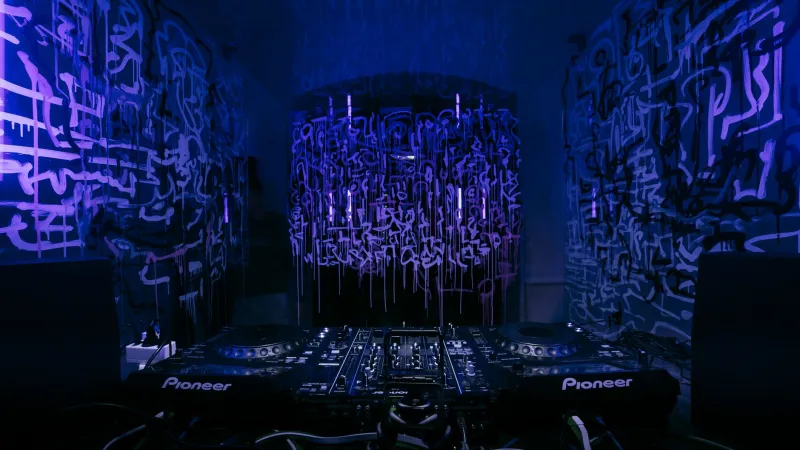
Some operate out of unmarked studios in industrial neighborhoods, the kind of buildings with no signage and a door that only opens if you know to knock twice. Others work in rotating pop-up spaces — a different location every time, communicated through word of mouth or analog channels. One collective in Detroit, which we'll call the Collective We Cannot Name Because They Asked Us Not To, has been operating for three years without ever appearing in a publication. Until now, sort of.
"The moment you name a thing, you start managing its perception," explains one member, who asked to be identified only as a sound artist based in the Midwest. "We didn't want to spend our energy on that. We wanted to spend it on the work."
Why the Grid Is a Trap
To understand why serious artists are choosing invisibility, you have to understand what visibility currently costs. The social media content machine doesn't care about your creative process. It cares about your posting frequency. It rewards the artist who documents everything over the artist who makes things worth documenting. It flattens context, compresses meaning, and turns creative practice into a performance of creative practice.
For many working artists, the response to this has been a kind of splitting — maintaining a public-facing presence that feeds the algorithm while doing the actual work somewhere the algorithm can't reach. The anonymous collectives represent the logical endpoint of that split: communities built entirely in the unreachable space, with no public-facing presence at all.
The results, by multiple accounts from people who've stumbled into these spaces, are genuinely different. Work made without any consideration for how it will photograph. Performances designed for the specific room and the specific night, not for documentation. Collaborations that exist only in the memory of the people who were there.
"There's no recording," says one attendee of a regular underground music series in Philadelphia that has no name and no fixed venue. "You can't share it afterward. You were either there or you weren't. That changes everything about how you pay attention."
The Music Underground Within the Underground
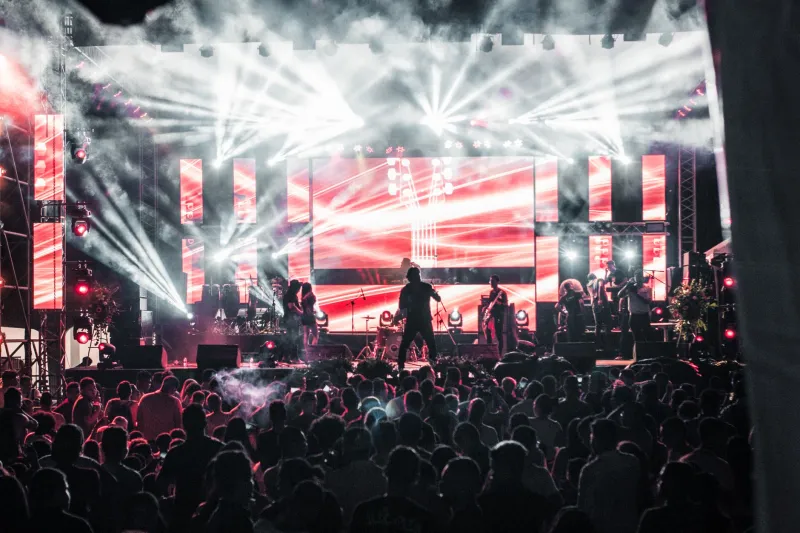
Within this broader phenomenon, the music world has produced some of its most interesting anonymous formations. Across American cities, collectives of musicians are organizing shows, recording sessions, and listening events that exist entirely outside the promotional apparatus of the music industry — no Spotify, no SoundCloud, no Bandcamp page, no booking agent, no merchandise table.
The music happening in these spaces tends to be genuinely experimental in ways that music with a brand to protect often can't afford to be. When there's no audience to maintain and no algorithm to satisfy, the only metric is whether the people in the room think it's worth doing. That is, it turns out, a remarkably liberating constraint.
One collective in Austin — operating for two years without a name, a social media presence, or a permanent home — has developed a practice of what they call "site-specific sound," creating music composed for and performed in a specific location that will never be performed anywhere else. An abandoned grain elevator. A parking garage at 2 AM. A community garden in the rain. The recordings, if any exist, are not shared.
"The music exists for the moment," says one participant. "When the moment is over, the music is over. That's not a limitation. That's the whole point."
How You Actually Find These Things
The honest answer is: slowly, and mostly by accident. The anonymous collective scene operates on trust networks built through genuine human connection — the kind that takes time and shared experience to develop. You know someone who knows someone. You show up to enough small, weird events that people start handing you notes with cross streets on them.
Some collectives have developed their own low-tech communication systems: physical bulletin boards in specific locations, notes passed through trusted intermediaries, coded listings in community newspapers that only make sense if you know what you're looking for. It's not deliberately exclusionary — most of the people involved will tell you they actively want new participants — but the friction is intentional. If you can't be bothered to find it, you're probably not the right audience for it.
There's something genuinely romantic about this, and also something practical. The friction filters for people who are showing up because they actually want to be there, not because the algorithm suggested it. The rooms are smaller. The attention is more concentrated. The work lands differently.
The Question Nobody Wants to Answer
Here's the uncomfortable thing about writing this article: any attention we bring to this world risks changing it. The anonymous collective scene thrives precisely because it's unknown. Visibility is the thing it's protecting itself against.
The people we spoke with were, almost universally, ambivalent about being spoken to at all. Several declined entirely. Those who participated did so with a kind of resigned generosity — a recognition that the ideas, at least, deserve wider circulation even if the specific coordinates do not.
"We're not hiding because we're afraid," says one collective member, carefully. "We're hiding because the hiding is part of what makes the work possible. The work needs the quiet."
Somewhere in a city we're not going to name, in a building with no sign, a group of people is making something extraordinary for an audience of twenty. The work will not be documented. The night will not be recapped. And it will matter more, to the people in that room, than almost anything they've consumed online this year.
We think that's worth knowing about. Even if you can't find it.