Eight Wheels, Zero Chill: How America's Roller Rinks Became the Wildest Cultural Comeback Story Nobody Saw Coming
Eight Wheels, Zero Chill: How America's Roller Rinks Became the Wildest Cultural Comeback Story Nobody Saw Coming
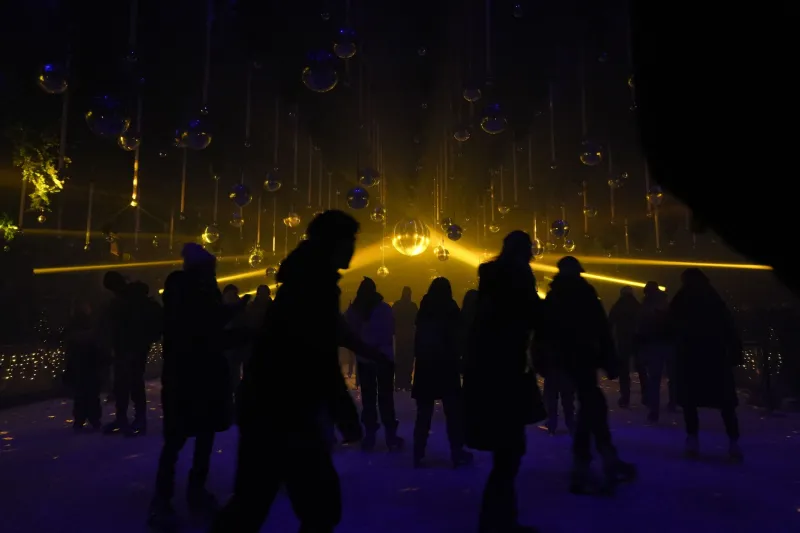
Somewhere in Detroit, a disco ball the size of a small moon is spinning over a converted warehouse floor packed with punks, drag queens, and a sixty-year-old man in a sequined jumpsuit who is, objectively, the best skater in the room. The DJ is playing a mutant hybrid of Chicago house and early Black Flag. A hand-painted mural of Toni Morrison covers an entire wall. Nobody is looking at their phone. Nobody is performing for an algorithm. Everybody is completely, unironically losing their minds.
Welcome to the roller rink revival — the cultural moment that arrived on eight wheels and absolutely refuses to leave.
The Death That Never Quite Happened
For most of the 2000s and early 2010s, the American roller rink existed in a kind of cultural purgatory. The golden age — those glorious, sweat-soaked 1970s and 80s nights when rinks were the social infrastructure of entire communities — had seemingly ended. Malls ate their lunch. Arcades stole their teens. The internet finished the job. By 2010, the number of operating rinks in the US had dropped by roughly half compared to their peak.
But here's the thing about spaces that carry that much collective joy: they don't really die. They just wait.
And then the pandemic happened — which sounds like the worst possible setup for a rollerskating renaissance, but stay with us. Lockdown-era TikTok turned outdoor skating into a bona fide phenomenon. Entire generations who'd never laced up a pair of quads suddenly found themselves desperately searching for skate parks, parking lots, and yes, actual rinks. Demand exploded. Owners who'd been quietly keeping the lights on suddenly had waitlists. Something cracked open in the cultural pavement, and through it came something genuinely weird and genuinely beautiful.
Atlanta Is Rewriting the Origin Story
Long before TikTok discovered rollerskating aesthetics, Black Americans were the heartbeat of rink culture. The JB Skate Center in Atlanta — a Black-owned institution that has operated for decades — is a living archive of that history, and its current owners are making absolutely sure that story gets told correctly.
Owner Dexter Saffold has spent years building JB into something that functions simultaneously as a neighborhood anchor, a cultural preservation project, and an absolute banger of a Friday night. The rink hosts DJ battles that trace the lineage from funk to Atlanta trap in real time. Local artists rotate murals through the lobby. Youth skating programs run alongside late-night adult sessions where the energy hits somewhere between a concert and a church revival.
"People think the roller rink is a novelty," Saffold has said in interviews. "It was never a novelty for us. It was ours."
That reclamation energy is central to what makes the current revival feel different from mere nostalgia tourism. This isn't about recreating a vague retro vibe for aesthetic content. It's about communities actively choosing physical, joyful, collective space — and insisting on controlling the narrative of what that space means.
Queer Nights, Punk Riffs, and the Beautiful Chaos of Collision
Back in Detroit, the warehouse rink scene has become ground zero for a particular flavor of beautiful creative collision. Venues like'll Skate — which operates out of a repurposed industrial space in the city's Corktown neighborhood — have built programming that makes absolutely no logical sense on paper and works perfectly in practice.
A typical month might include: a queer skate night soundtracked by hyperpop and ballroom classics, a punk-themed session where the DJ exclusively plays music that sounds like it was recorded in someone's garage in 1981 (because it was), and an all-ages Sunday afternoon where local visual artists set up installations around the rink perimeter while families attempt to not crash into them.
This deliberate genre chaos is the point. The roller rink, it turns out, is one of the few physical spaces left in American life where radically different subcultures can occupy the same floor without a velvet rope or a cover charge sorting them into separate experiences. The physics of skating — everyone moving in the same direction, everyone equally capable of spectacular wipeouts — creates a leveling effect that's genuinely hard to manufacture anywhere else.
The Aesthetic Is Working Overtime
Let's also be honest about the visual dimension here, because Nanigac is nothing if not willing to acknowledge when something looks absolutely incredible. The roller rink aesthetic — the neon, the carpet patterns that appear to have been designed by someone who hates your eyes, the vintage rental skates in colors that don't exist in nature — has become one of the most heavily referenced visual languages in contemporary design, fashion, and music video direction.
Designers are mining rink imagery for collections. Photographers are booking sessions on rink floors specifically for the light. Music videos from artists across hip-hop, pop, and indie have adopted the spinning-under-strobes visual grammar because nothing else communicates "unhinged fun" quite so efficiently.
The irony is that rink owners who kept those original carpet patterns and that original signage because they couldn't afford to replace them are now sitting on design gold. Authenticity, as it turns out, is extremely difficult to fake — and the real thing hits different.
Why Your Body Knows Something Your Brain Forgot
There's a reason the roller rink revival isn't just a trend — it's filling a specific, identifiable void. American nightlife has spent the last decade optimizing itself into a corner. Everything is curated, photographed, reviewed, and algorithmically sorted before you even arrive. The pressure to have the correct experience in the correct way is exhausting.
Roller skating is fundamentally resistant to that optimization. You cannot look cool while learning to skate. You will fall. You will flail. You will discover muscles you didn't know you had, and they will hate you the next morning. The learning curve is public and somewhat humiliating and completely, cathartically freeing.
Young Americans, who have grown up performing their leisure for audiences, are apparently extremely hungry for experiences that refuse to be performed. The rink offers exactly that: a space where the doing is the point, where the body takes over from the brand, where chaos is not a bug but the entire feature.
The Rink Is Not Coming Back — It Never Left
The narrative of the roller rink revival loves the word "comeback," but that framing misses something important. In Black communities, in queer communities, in the working-class neighborhoods where rinks never fully closed because they were too essential to let die, there was no gap. The rink persisted, stubbornly and joyfully, through every trend cycle that declared it irrelevant.
What's actually happening now is that the rest of America is catching up — finally noticing what those communities always knew. That spinning in circles under artificial stars with strangers who are all equally bad at stopping is, somehow, one of the most human things you can do with a Tuesday night.
So find your local rink. Rent the ugly skates. Fall down. Get up. The disco ball doesn't care about your aesthetic. It's been spinning the whole time.