Strings Attached: The Gloriously Unhinged Puppet Underground Rewriting What This Art Form Can Do
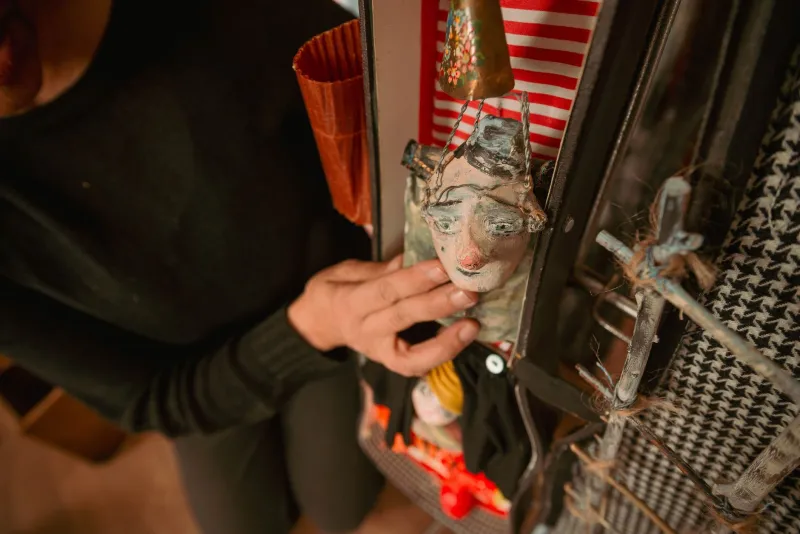
Somewhere in a converted warehouse in Portland, a six-foot bureaucrat made of PVC pipe and recycled office supplies is delivering a monologue about healthcare costs. The audience — mostly twenty-somethings in thrifted flannels, a few older weirdos who've been here since the beginning — is dead silent. Then someone laughs. Then everyone does. Then nobody does. It's uncomfortable in the best possible way.
This is not your cousin's birthday party. This is the American puppet underground, and it is absolutely, magnificently unhinged.
The Art Form That Refused to Stay Cute
Puppetry has been around longer than most religions and considerably longer than the internet, which means it has had plenty of time to get strange. Ancient Greeks used marionettes for ritual performances. Medieval Europe weaponized puppet shows to mock the clergy — which, honestly, feels very on-brand for what's happening right now in DIY theaters from Brooklyn to Albuquerque.
But somewhere in the 20th century, American puppetry got domesticated. It became synonymous with Saturday morning cartoons, felt counting lessons, and the kind of wholesome content that made parents feel safe leaving the room. Jim Henson was a genius — nobody's disputing that — but his mainstream success had a shadow effect: it convinced the culture that puppets were fundamentally a children's medium.
A whole generation of artists decided that was nonsense.
Meet the People Doing the Weird Work
The contemporary puppet underground doesn't have a single face or a central headquarters. It's more like a mycelium network — sprawling, decentralized, and quietly feeding something enormous underground.
In Chicago, collectives like Manual Cinema have been blowing minds for years with shadow puppet films projected live on massive screens, mixing cinematic storytelling with raw theatrical energy. Their productions have toured internationally, but their roots are firmly in the scrappy, make-it-work ethos of DIY performance culture. Cardboard, overhead projectors, and a willingness to rehearse until 3 a.m. — that's the vibe.
In New York, artists working under the broader umbrella of the Jim Henson Foundation (which, yes, funds genuinely experimental adult work — Henson himself was always weirder than the mainstream gave him credit for) are creating pieces that deal with grief, immigration, bodily autonomy, and late-stage capitalism. Using materials ranging from industrial foam to taxidermied animal parts. Sometimes simultaneously.
Down in New Orleans, where the line between performance art and spiritual practice has always been productively blurry, puppet artists are incorporating Mardi Gras Indian traditions, Haitian Vodou aesthetics, and Gulf Coast folklore into massive street spectacles that feel less like shows and more like collective hallucinations.
And in smaller cities — Asheville, Tucson, Richmond, Minneapolis — tiny puppet companies are renting out spaces that used to be laundromats or auto repair shops, building audiences one word-of-mouth show at a time.
Why Is Gen Z Suddenly Obsessed?
Here's the thing nobody in the mainstream press seems to have noticed yet: young people are going absolutely feral for this stuff.
It tracks, actually, once you think about it for more than thirty seconds. Gen Z grew up swimming in digital content — algorithmically optimized, endlessly scrollable, perfectly lit and color-graded to within an inch of its life. At some point, all that polish starts to feel like a kind of violence. You start craving something that could go wrong. Something handmade. Something that exists only once, in a specific room, with specific people breathing the same recycled air.
Puppetry, especially the raw, lo-fi, warehouse-theater variety, delivers all of that and then some. There's a puppet made of salvaged junk performing a monologue about existential dread, and it could malfunction at any moment, and the person operating it is visible right there on stage, and somehow that visibility — that deliberate refusal to hide the mechanism — makes the whole thing more emotionally devastating, not less.
TikTok has actually been a weirdly powerful vector for spreading this stuff. Short clips of elaborate puppet builds, behind-the-scenes construction videos, and lo-fi performance footage have been racking up millions of views. The aesthetic — raw materials, visible seams, handmade chaos — is catnip for an audience that's exhausted by CGI smoothness.
The Craft Is Brutally, Beautifully Hard
Let's be real about something: this is not easy work. Professional puppet construction is an engineering discipline masquerading as folk art. A single performance-quality figure can take hundreds of hours to build and cost thousands of dollars in materials. Manipulation — the technical term for actually operating the thing — requires the kind of muscle memory that only comes from obsessive, repetitive practice.
And unlike, say, stand-up comedy or indie filmmaking, there is no obvious commercial ladder to climb. You're not going to go viral on puppet TikTok and immediately get a Netflix special. The economics are genuinely brutal: most working puppet artists in the underground scene are also teaching workshops, doing school residencies, applying for grants, and probably holding down a side hustle or three.
What keeps them going, almost universally, is the thing that keeps anyone going in an art form that refuses to make financial sense: the work itself is too good to stop.
The Politics Are Built Into the Form
There's a reason authoritarian regimes throughout history have been deeply uncomfortable with puppet theater. The form has a built-in subversive charge — the obvious artificiality of the figure creates a kind of satirical distance that lets artists say things that would be too confrontational coming from a human actor's mouth. You can make a puppet of a senator and have it do things that would get a human performer canceled before the curtain call.
The contemporary underground is leaning into this hard. Political satire, environmental grief, racial justice, gender identity, economic anxiety — all of it is showing up on puppet stages right now, filtered through materials and movement and a commitment to making the audience feel something they didn't expect to feel when they bought a twelve-dollar ticket to watch someone move a foam object around a black box theater.
It's ancient technology running the most current software imaginable.
Where to Find It
If you want in, the entry points are out there — you just have to look slightly sideways. The National Puppetry Festival rotates cities and is legitimately wild. UNIMA-USA (the US chapter of the international puppetry organization) maintains directories of working artists and companies. Local DIY festival circuits — the kind that also feature experimental noise acts and zine fairs — increasingly include puppet performance.
Or, honestly, just start following puppet artists on Instagram and TikTok. The algorithm will do the rest, and for once, you might actually be grateful for it.
The puppets are waiting. They've got things to say. And they are not, under any circumstances, here to count to ten.